
What Is E-Waste? A Practical Guide to
Understanding Electronic Waste
Electronic waste, commonly called e-waste, refers to discarded electrical and electronic equipment and its components.
These are products that require electricity or electromagnetic fields to operate, including equipment powered by mains electricity, batteries or other electrical sources.
As technology changes and electronic products are replaced, households and organisations accumulate devices that are broken, outdated, unwanted or no longer suitable for their original purpose.
Knowing what qualifies as e-waste is the first step towards managing it responsibly.
What Items Count as E-Waste?
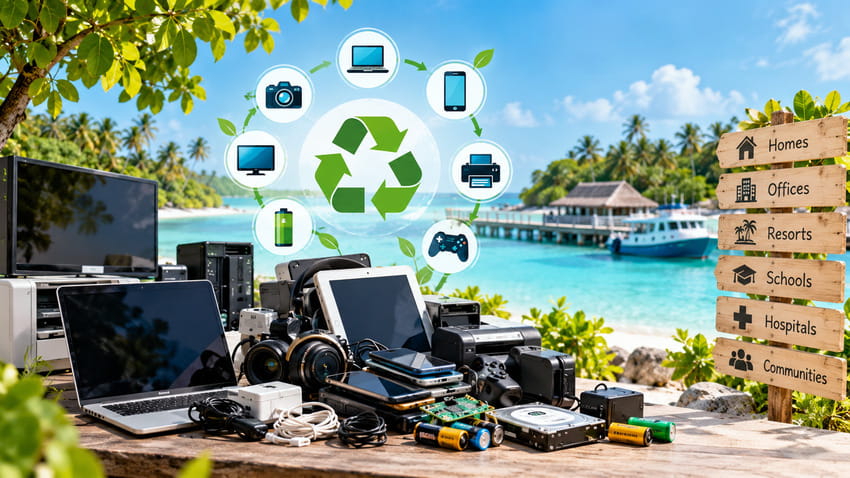
E-waste can come from homes, offices, schools, resorts, hospitals, shops and industrial or commercial operations.
Common examples include:
Computers and Office Equipment
- Desktop computers and laptops
- Computer monitors and keyboards
- Printers, scanners and photocopiers
- Routers, modems and networking equipment
- Servers and selected data-storage devices
Mobile and Communication Devices
- Mobile phones and smartphones
- Tablets and electronic accessories
- Landline telephones
- Communication and networking equipment
Household Electronics
- Televisions and audio equipment
- Digital cameras
- Electronic toys and gadgets
- Small electrical appliances
- Electronic control units and accessories
Cables, Components and Batteries
- Chargers, adapters and power supplies
- Electrical and data cables
- Circuit boards and electronic components
- Rechargeable batteries and battery-containing equipment
Commercial and Institutional Equipment
Businesses, resorts, hospitals, schools and government institutions may also generate larger quantities of electronic waste, including obsolete IT equipment, communication systems, electronic monitoring devices and other specialised equipment.
Some items require additional handling arrangements. Refrigeration equipment, medical electronics, solar equipment and damaged batteries, for example, should be identified clearly when requesting collection rather than treated as ordinary mixed e-waste.
Why Should E-Waste Be Separated from Ordinary Waste?
Electronic products can contain a mixture of recoverable materials and components that require careful handling.
Unsuitable disposal or dismantling may release hazardous substances, damage batteries or create fire risks. It can also make it more difficult to recover valuable materials safely.
Separating e-waste at the point where it is generated helps make collection, identification, storage and downstream processing more organised.
For the Maldives, where waste management must account for island geography and transportation between locations, proper separation can also help improve collection planning.
How to Prepare Your Old Electronics for Collection
Follow these steps before handing over unwanted electronics.
Step 1: Decide Whether the Item Can Be Reused
Check whether the device can be repaired, refurbished, donated or transferred for further use.
Extending the useful life of working equipment can reduce unnecessary waste. However, reuse should only be considered when the equipment is safe, functional and suitable for its intended purpose.
Step 2: Back Up and Protect Your Data
Before surrendering a computer, phone, tablet or storage device:
- Back up important files.
- Sign out of personal and business accounts.
- Remove SIM cards and memory cards where applicable.
- Perform an appropriate factory reset or secure data-erasure process.
- Follow your organisation’s information-security procedures for business equipment.
A factory reset may not be sufficient for every device or storage medium. Organisations handling confidential or regulated information should arrange suitable data sanitisation or destruction where necessary.
Important: Do not assume that handing a device to an e-waste collector automatically means that all stored information has been securely erased.
Step 3: Keep Different Items Identifiable
Where practical, separate computers, monitors, phones, cables, batteries and other electronic items into identifiable groups.
Do not dismantle equipment simply to separate its components unless you are qualified and have appropriate facilities.
Keep devices and components protected from rain, moisture, accidental damage and unauthorised access.
Step 4: Handle Damaged Batteries with Care
Do not crush, puncture or dismantle batteries. Avoid mixing loose batteries with metal objects or storing damaged batteries where they may overheat.
If a battery is swollen, leaking, unusually hot or visibly damaged, do not handle it as routine e-waste. Keep people away from the immediate hazard and seek appropriate safety guidance from a qualified handler or relevant emergency service.
Step 5: Arrange Responsible Collection
Contact an appropriate e-waste collection provider and explain what you have, where it is located and approximately how much equipment needs to be collected.
For island-based collection requests, provide the island or atoll, the type and quantity of equipment, any special handling requirements and your preferred collection arrangements.
These details help determine the appropriate collection, consolidation and transportation process.
What Should You Avoid?
To help protect people and the environment, avoid these practices:
- Burning cables, circuit boards or electronic equipment.
- Breaking electronics apart to recover metals using unsafe methods.
- Mixing electronic waste with food waste or other general rubbish.
- Leaving discarded devices exposed to rain or the elements.
- Throwing batteries into ordinary bins without checking the appropriate disposal route.
- Handing over confidential devices without considering data security.
- Assuming that all electronic waste can be recycled in the same way.
Responsible handling begins before the device leaves your home or workplace.
How ESMV Can Help
Eco Sustainables Maldives (Pvt) Ltd. (ESMV) works to connect electronic waste generated by households, communities, businesses and institutions with a structured management pathway.
ESMV’s model includes collection, sorting, preparation and responsible downstream management, including export where appropriate and subject to applicable requirements.
Whether you are clearing out old household electronics, replacing office computers or planning an institutional collection drive, you can contact ESMV to discuss the type of equipment involved and the appropriate collection arrangements.
Small Actions, Lasting Benefits
Responsible e-waste disposal does not need to be complicated. By identifying unwanted electronics, protecting personal information, separating equipment and using suitable collection channels, individuals and organisations can make more informed decisions.
In an island nation where environmental protection is closely connected to community wellbeing and natural resources, these everyday choices matter.
Have unwanted electronics to dispose of? Contact ESMV to discuss responsible e-waste collection in the Maldives.
